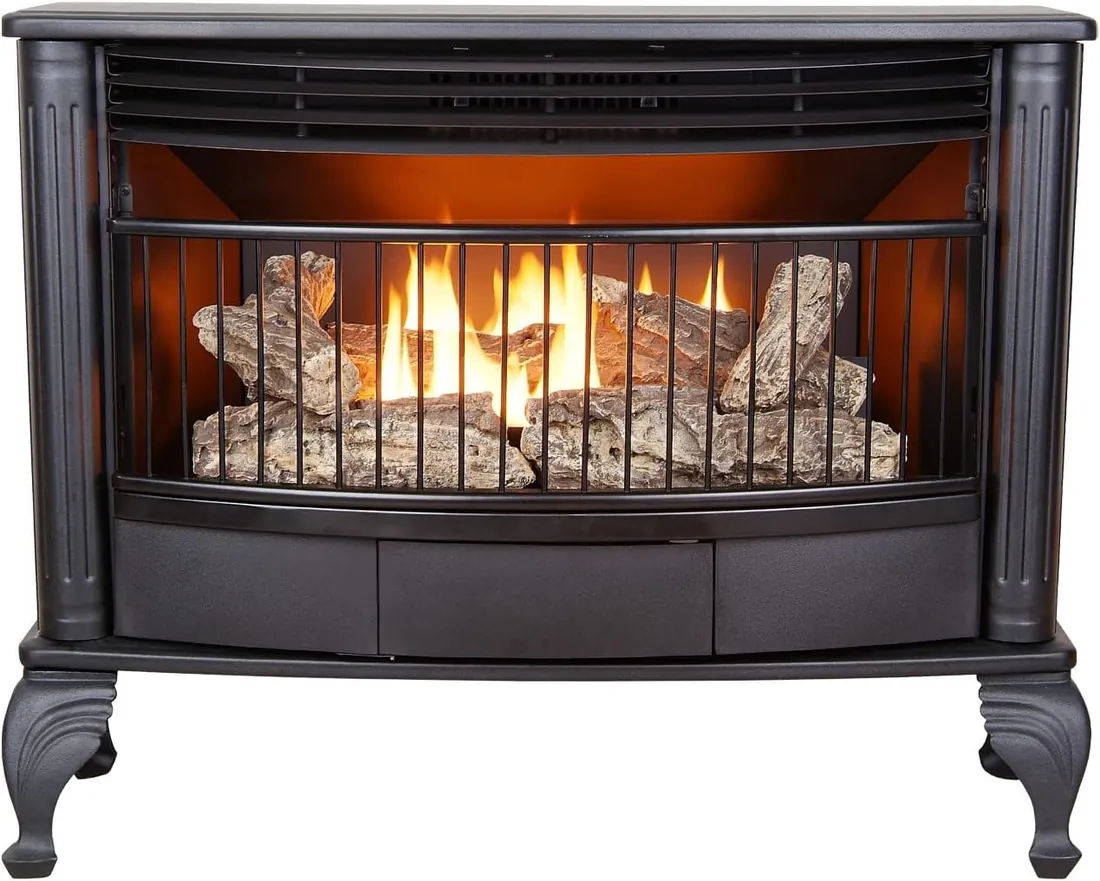
Most aftermarket remotes control millivolt gas valves, the kind powered by the pilot's thermopile with no household electricity. A receiver connects to the valve's on/off switch wires; the handheld turns the burner on or off, holds a set temperature (thermostat models) or runs a timer. Check that your valve is millivolt and remote-ready in its manual before buying.
Millivolt valves in a sentence
Many gas log sets and fireplaces use a standing pilot that heats a thermopile, a stack of thermocouples that generates a few hundred millivolts. That tiny voltage powers the gas valve and the wall switch circuit, which is why these fireplaces keep working in a power cut. A remote replaces or sits alongside the wall switch: it simply closes the same switch circuit.
Fireplaces with electronic ignition and household-voltage controls use the maker's own remotes instead; an aftermarket millivolt remote isn't meant for them. The valve label and manual say which kind you have.
Types of remote
| Type | What it does | Suits |
|---|---|---|
| On/off | Turns the burner on and off | Occasional use, simple control |
| Thermostat | Handheld senses room temperature and cycles the burner to hold a setting | Using the fireplace as a heater |
| Timer | Shuts the burner off after a set time | Avoiding a fireplace left on |
| Wall-mount or wired | Replaces a wall switch with a programmable control | A fixed control point |
Remotes and thermostats in our catalog: ProCom QNSD250T Fireplace Thermostat Remote. Each product page lists the maker's stated range and functions.
Before you buy
- Confirm the valve is millivolt and has remote or wall-switch terminals (the manual or valve label shows them).
- Check the receiver's mounting: in a log set the receiver must stay out of the heat, often in a side compartment or under the grate's cool zone, per its manual.
- Plan battery replacement for both the handheld and the receiver.
- For thermostat remotes, keep the handheld in the room you want to control, away from the fire's direct heat.
Safety
A remote doesn't change how the fireplace burns, only how it's switched. The burner, pilot, ODS (on vent-free units) and venting still need yearly inspection before the season, as NFPA advises for heating equipment, and the manual's rules on doors, dampers and room size still apply.
Installing a receiver
The receiver connects with two wires to the valve's switch terminals, the same terminals a wall switch uses; many kits include the wires. Mount it where the manual says, never on the burner pan, and switch the receiver to 'remote' mode. If you aren't comfortable working at the gas valve, a hearth technician can fit it during the yearly service.