Pick vented logs for the look of a wood fire in a working masonry fireplace, with the damper open while they burn. Pick vent-free logs for heat, only where code allows them, in a room that meets the size in the manual, with the damper closed as the manual directs.
Two ways to burn in a fireplace
A vented log set sits in a wood-burning fireplace with its chimney damper open, sometimes clamped open permanently. The burner produces a large, lazy yellow flame that licks the logs, and its exhaust goes up the chimney with most of the heat. A vent-free set burns hotter and cleaner with a smaller, bluer flame so it can run with the damper closed; its heat and combustion products stay in the room, and it carries an oxygen-depletion sensor.
Both kinds sell on their BTU input. A vented set's BTU figure tells you how much gas it burns, not how much heat reaches the room; a vent-free set's BTU input is much closer to the heat you feel.
Compared
| Vented logs | Vent-free logs | |
|---|---|---|
| Damper | Open while burning | Closed (per manual) |
| Flame | Tall, yellow, wood-like | Smaller, bluer |
| Heat to the room | Little; most goes up the chimney | Most of it |
| Indoor air | Exhaust leaves through the chimney | Combustion products and moisture stay in the room |
| Where allowed | Working wood-burning fireplaces | Where local code permits, in rooms sized to the manual |
Log sets in our catalog: vented RealFyre SDP-24 Vented Gas Log Set and Duluth Forge FNVL24-1 Natural Gas Vented Gas Log Set; vent-free Real Fyre G18 30-Inch Natural Gas Vent-Free Gas Log Set, Real Fyre G10 24-Inch Natural Gas Vent-Free Gas Log Set and Real Fyre S9-24 + G9-24P Propane Vent-Free Gas Log Set.
Matching a set to your fireplace
Measure the firebox: front width, rear width, depth and height. Log sets are sold by nominal width (18, 24, 30 inches and so on), and the manual lists the minimum firebox dimensions for each. A set that is too big for the box can overheat the surround or roll flame out of the opening; too small looks lost. Our product pages show the width each listing states.
Then check the fuel (natural gas or propane), the ignition (match-light, manual safety pilot, or remote-ready millivolt valve) and any remote or thermostat the set supports. A remote-ready valve can be paired with the kind of fireplace remote we list in the hearth gear hub.
Codes, rooms and safety
Vent-free sets carry the same limits as other vent-free appliances: a minimum room size for their BTU input, often an altitude limit, and restrictions or bans in some jurisdictions and in bedrooms. Vented sets need a sound, open chimney; NFPA advises chimney and heating system inspection and cleaning each year before the season.
Which to choose
- You want the look of a wood fire and have a working chimney: vented logs.
- You want heat from the fireplace and local code allows it: vent-free logs sized to the room.
- You want heat and the room is small or a bedroom: a direct-vent insert, not a log set.
Heaters in this guide
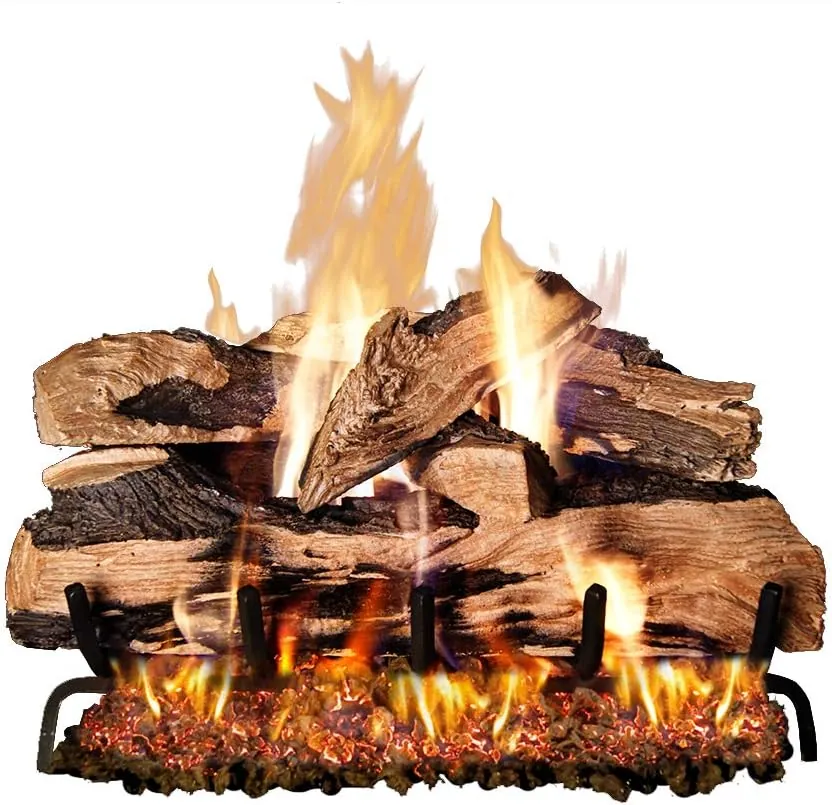
RealFyre SDP-24 Vented Gas Log Set
90,000 BTU/h · Vented
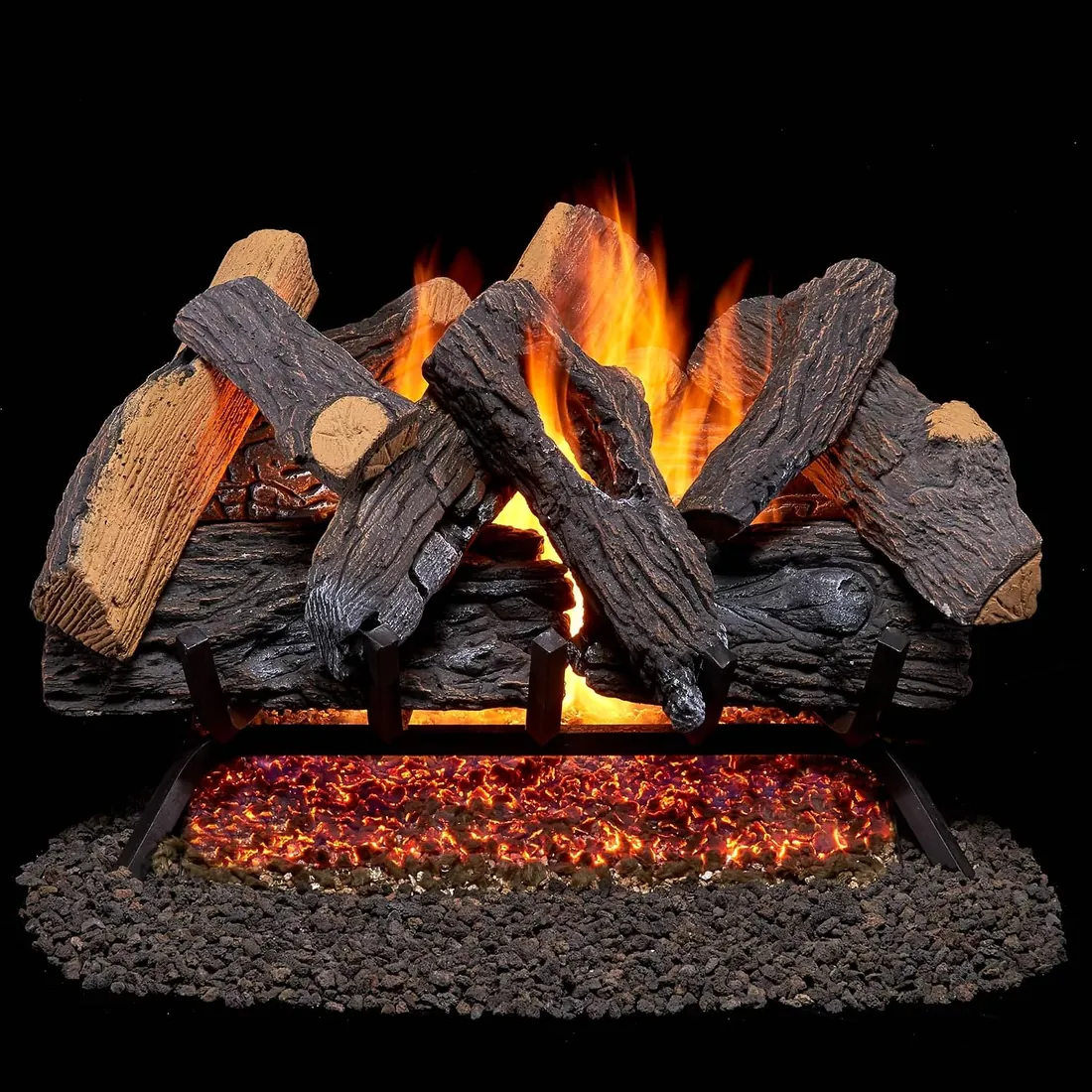
Duluth Forge FNVL24-1 Natural Gas Vented Gas Log Set
55,000 BTU/h · Vented
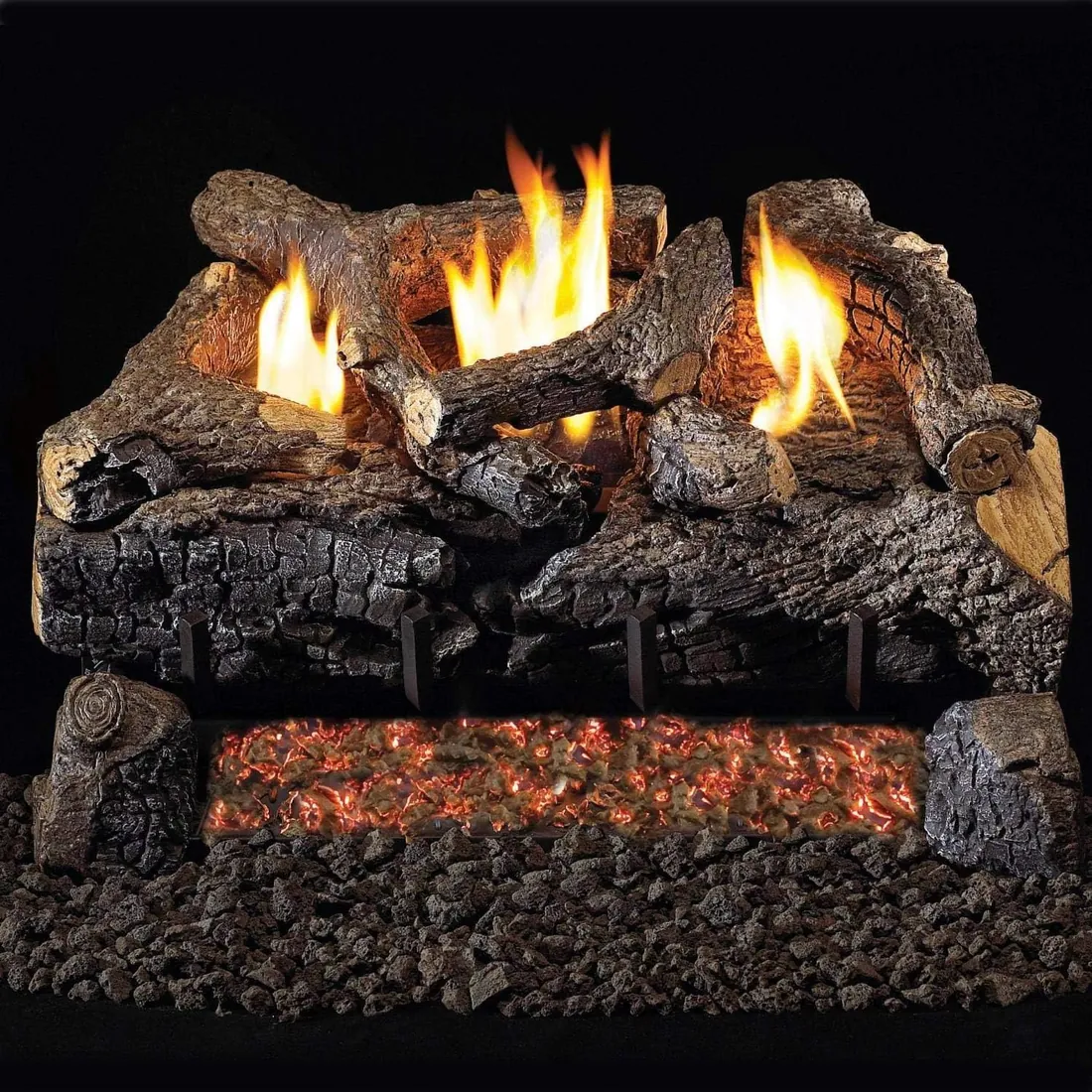
Real Fyre G18 30-Inch Natural Gas Vent-Free Gas Log Set
30 in · 38,000 BTU/h · Vent-free
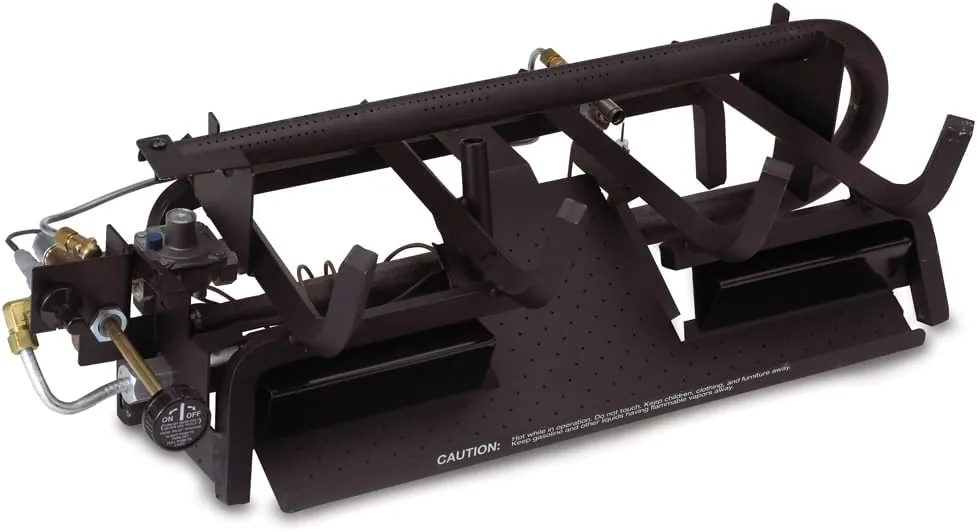
Real Fyre G10 24-Inch Natural Gas Vent-Free Gas Log Set
24 in · 37,000 BTU/h · Vent-free
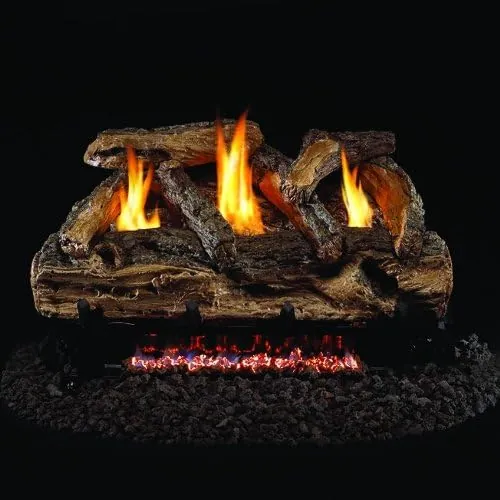
Real Fyre S9-24 + G9-24P Propane Vent-Free Gas Log Set
36,000 BTU/h · Vent-free