A wood stove runs without electricity and burns cordwood you can cut or buy locally, but needs a full chimney and hands-on loading. A pellet stove feeds itself from a hopper, holds a set temperature and vents through a wall, but needs electricity to run.
The core difference
A wood stove is a firebox and a chimney: you load split logs, set the air and the fire does the rest. A pellet stove is an appliance: an auger moves pellets from a hopper into a burn pot, fans supply combustion air and push heat into the room, and a control board holds the setting. That makes the pellet stove easier to live with day to day and the wood stove more independent.
RECS 2020 puts wood heat in perspective: 2.25 million US homes heat mainly with wood (1.94 million of them with a heating stove), and 8.83 million use wood as secondary heat, 3.13 million of those in a stove. Most stove buyers are adding a heat source, not replacing the furnace.
Side by side
| Wood stove | Pellet stove | |
|---|---|---|
| Fuel | Split cordwood, seasoned under 20% moisture (EPA) | Bagged wood pellets |
| Loading | By hand, every few hours | Hopper holds a day or more at low output (maker figures) |
| Electricity | Not needed to burn; a blower, if fitted, needs power | Needed for the auger, fans and controls |
| Venting | Full chimney or insulated chimney pipe | Smaller vent pipe, often through the wall (manual decides) |
| Temperature control | Air control; output rises and falls | Thermostat or heat setting |
| Ash and cleaning | Ash pan or shovel; chimney inspection each year | Burn pot cleaning; vent inspection each year |
Hopper sizes and burn times differ widely; our product pages show each maker's figures. A larger hopper means fewer refills but also a taller or deeper stove.
Running cost per million BTU
The fairest way to compare fuels is the price of one million BTU of heat that reaches the room. The USDA Forest Products Laboratory's fuel table gives seasoned firewood a gross heat content and a typical appliance efficiency; EIA puts a cord at 20,000,000 BTU. At an example price of $300 a cord, cordwood works out to about $19.48 per million BTU delivered. At $350 a ton of pellets it is about $25.71. Your local prices change the answer, which is why our fuel cost calculator takes your own.
Two caveats: the efficiency in that table is a typical figure, and your stove's own efficiency (where the maker states it) can be higher or lower; and free or self-cut wood makes the wood column look far better, as long as you count your time and saw.
Power cuts
A wood stove keeps heating when the grid goes down; a blower, if it has one, stops, but the stove radiates. A standard pellet stove stops: without power the auger and combustion fan can't run. Some pellet stoves accept a battery backup, and a few gravity-fed models are designed to run without electricity; read each listing's own statement. Our guide to pellet stoves in a power outage covers the options.
Who each one suits
- Wood stove: rural or semi-rural homes with storage space and a wood source, owners who want heat during outages, homes with an existing masonry chimney.
- Pellet stove: homes without a chimney, owners who want set-and-forget temperature control, buyers who prefer bagged fuel to stacked cordwood.
- Either: check clearances, floor protection and venting in the maker's manual before choosing a spot.
Stoves in our catalog to compare: Ashley Hearth AW3200-P Wood Stove, Ashley Hearth AW2520E-P 2,500 Sq Ft Wood Stove, Ashley Hearth AP5622-W 3,000 Sq Ft Pellet Stove, Canyon Lodge F500800 Pellet Stove and Cleveland Iron Works F500205 Pellet Stove.
Heaters in this guide
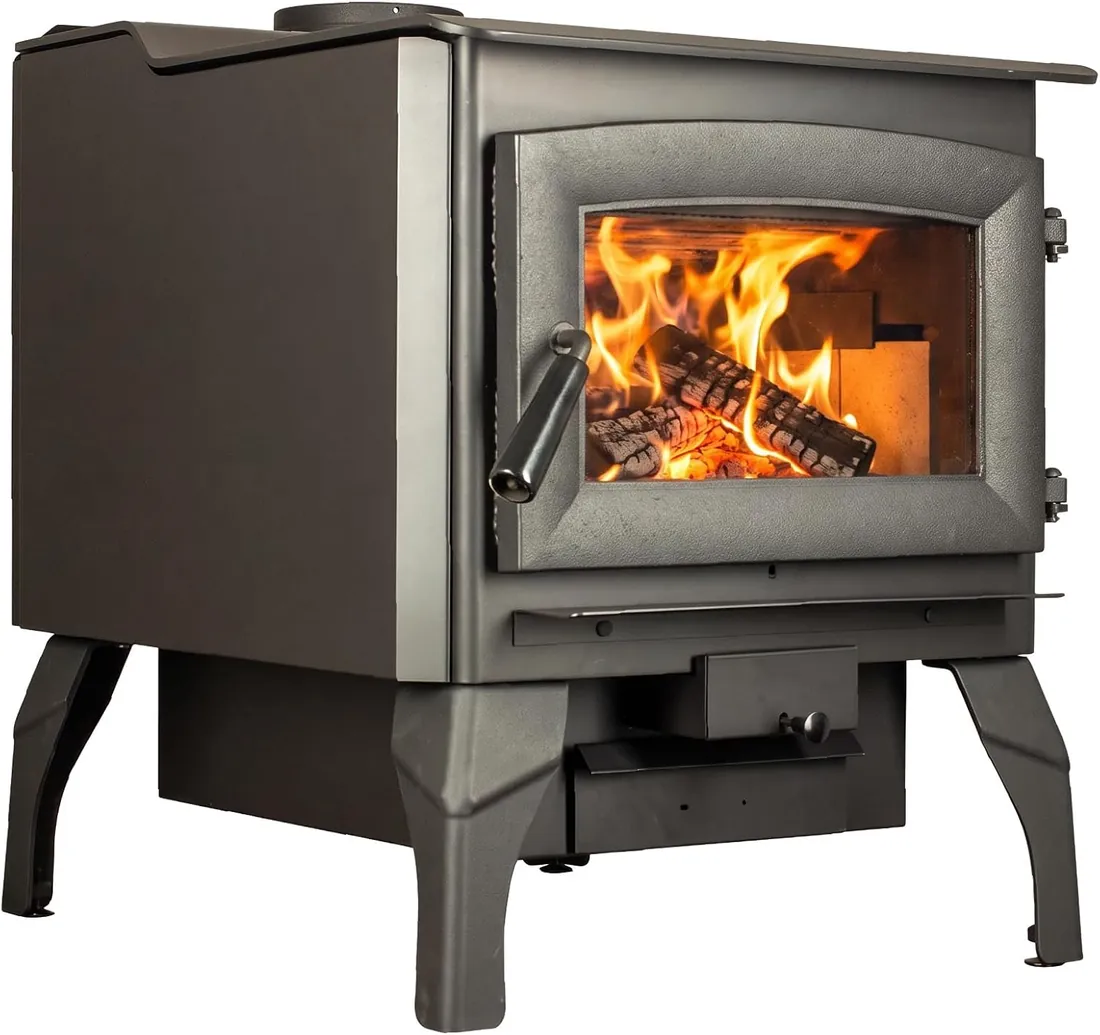
Ashley Hearth AW3200-P Wood Stove
3,200 sq ft · 152,000 BTU/h
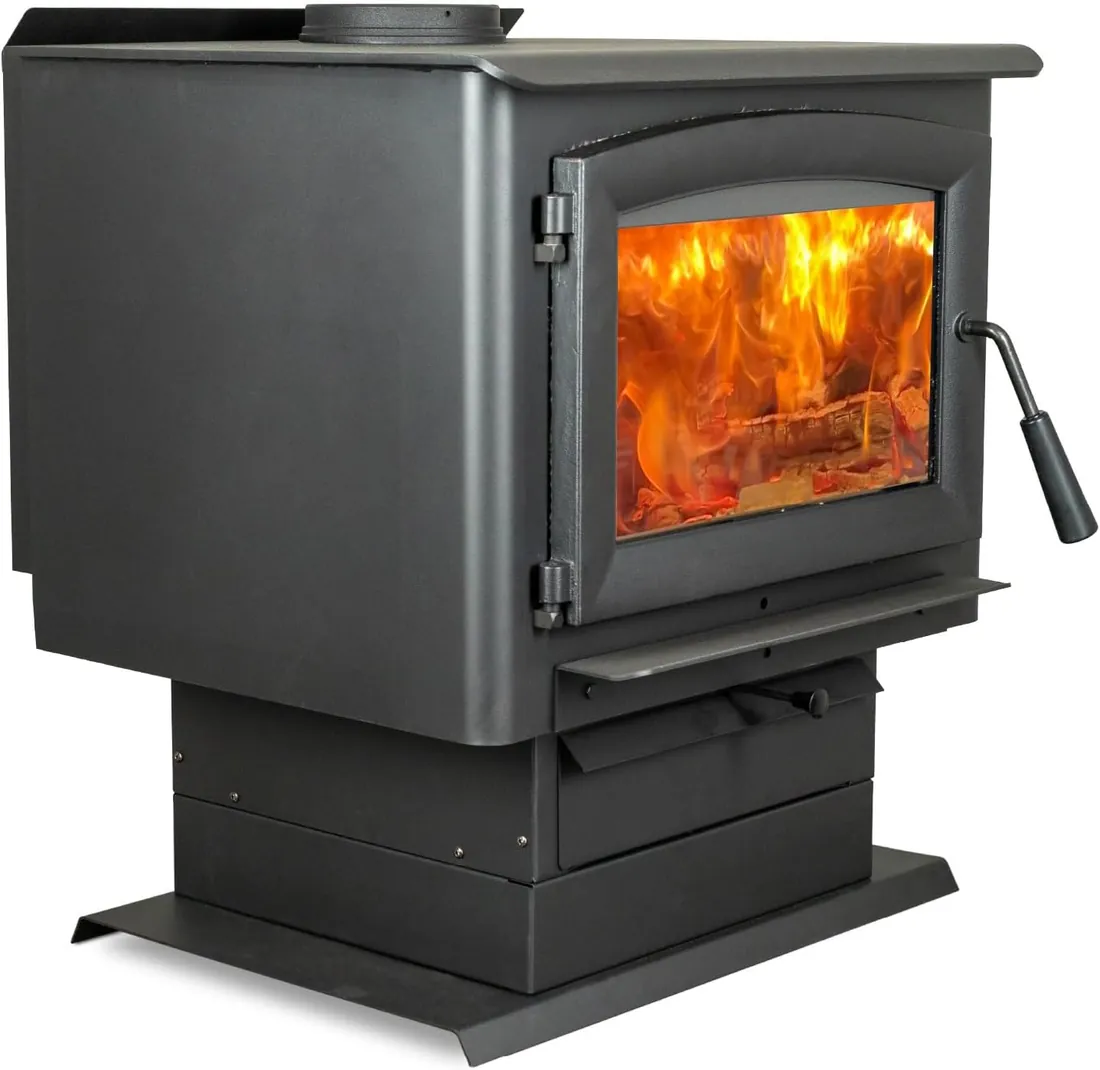
Ashley Hearth AW2520E-P 2,500 Sq Ft Wood Stove
2,500 sq ft · 112,800 BTU/h
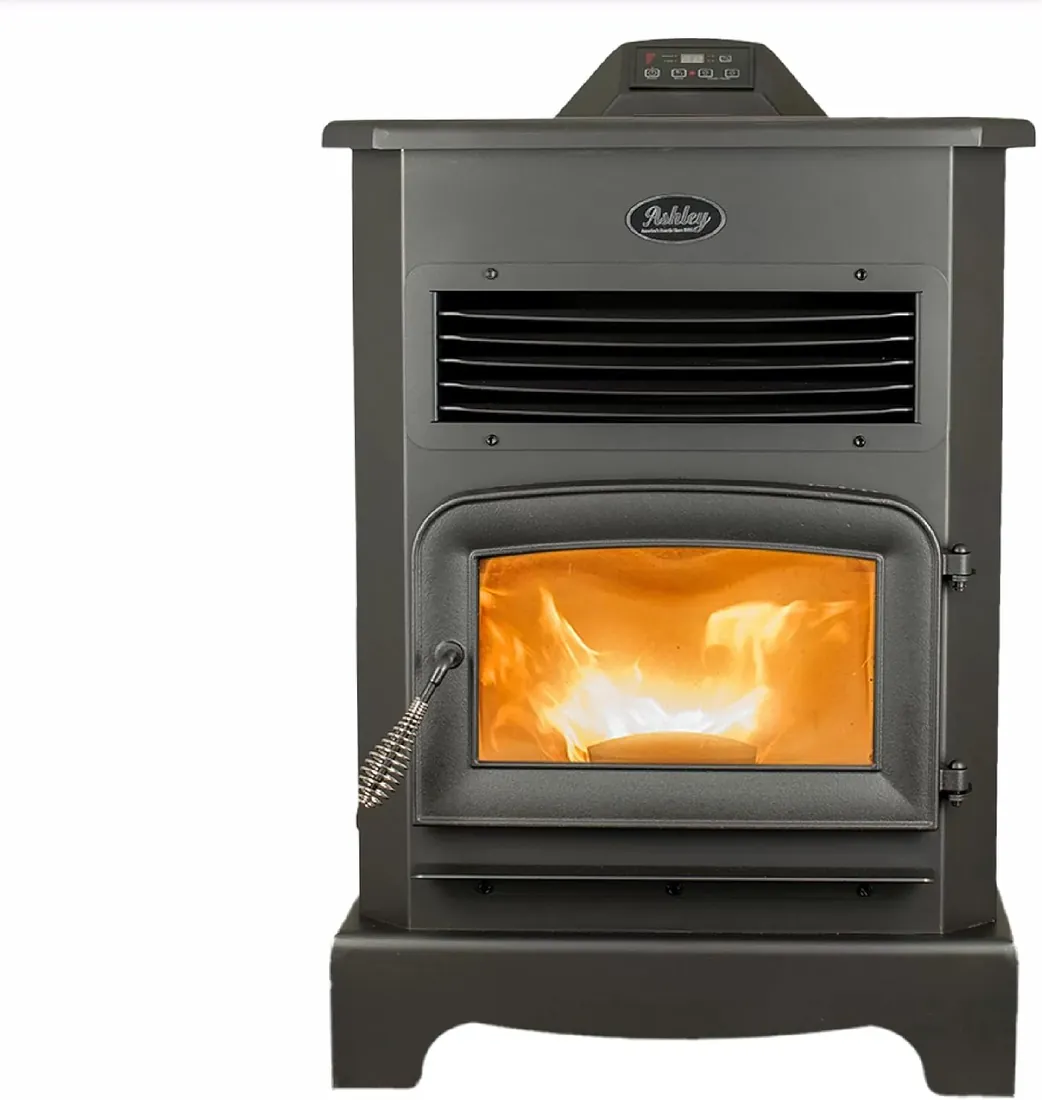
Ashley Hearth AP5622-W 3,000 Sq Ft Pellet Stove
3,000 sq ft · 33,000 BTU/h · 170 lb
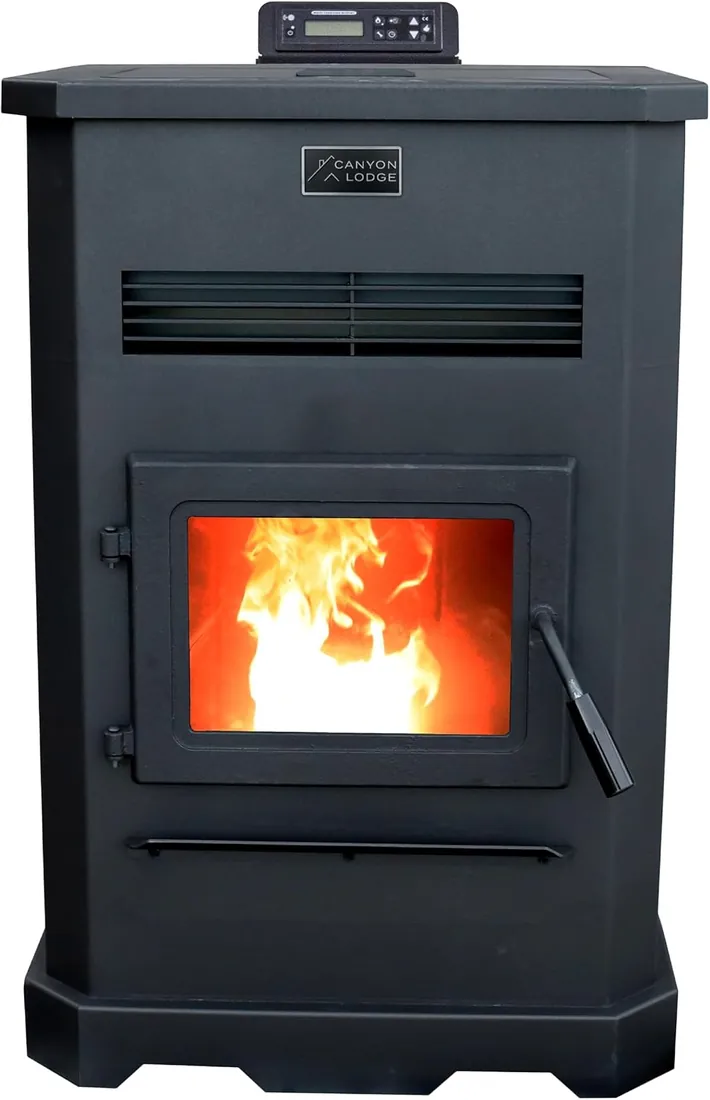
Canyon Lodge F500800 Pellet Stove
3,000 sq ft · 29,501 BTU/h · 130 lb
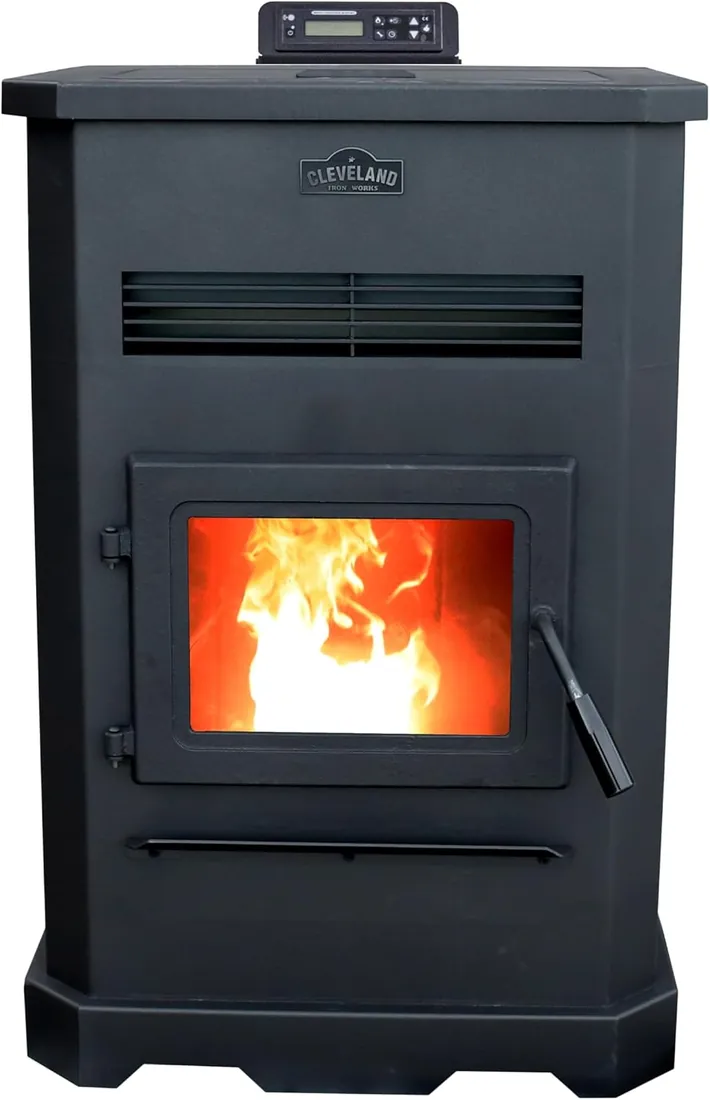
Cleveland Iron Works F500205 Pellet Stove
3,000 sq ft · 29,501 BTU/h · 130 lb