Every watt of an electric heater becomes 3.412 BTU per hour of heat, so a 1,500-watt fireplace gives about 5,118 BTU/h whatever its styling. That suits supplemental heat for one room; at EIA's August 2026 US residential average of 18.16 cents per kWh it costs about 27 cents an hour on high.
Watts to BTU
Electric resistance heat is simple arithmetic. EIA puts one kilowatt-hour at 3,412 BTU, so one watt running for an hour is 3.412 BTU. A fireplace heater on its 1,500-watt high setting gives 1,500 x 3.412 = 5,118 BTU per hour; on a 750-watt low setting, 2,559 BTU per hour. Listings that advertise '5,000 BTU' are describing a 1,500-watt heater.
| Setting | Heat output | Cost per hour at 18.16 cents/kWh |
|---|---|---|
| 1,500 W (typical high) | 5,118 BTU/h | $0.27 |
| 1,000 W | 3,412 BTU/h | $0.18 |
| 750 W (typical low) | 2,559 BTU/h | $0.14 |
| Flame only, heater off | Only the lamp or LED power | A few cents or less |
The electricity price is EIA's US residential average for August 2026; your utility's rate may be higher or lower, and our fuel cost calculator takes your own.
What room it can warm
Makers of 1,500-watt units in our catalog state heating areas from 400 to 1,000 square feet (median 400). Read that as supplemental heat: a 1,500-watt heater adds the same 5,118 BTU per hour whatever area the listing claims, so it can warm a single living room or bedroom on a cool evening but won't replace central heat on a cold day. Infrared quartz models and fan-forced models deliver the same total heat for the same watts; they differ in how they spread it.
Fireplaces in our catalog, highest wattage first: Comfort Glow EQS130 Electric Stove Heater (1,500 W), Dimplex GDS28L8-1152LR Electric Fireplace Mantel (1,500 W), Dimplex PLF3614-XS Wall Electric Fireplace (1,500 W), Dimplex PLF4214-XS Wall Electric Fireplace (1,500 W).
The circuit it needs
A 1,500-watt heater on a 120-volt outlet draws 12.5 amps (watts divided by volts). That is most of a standard 15-amp circuit, so other loads on the same circuit can trip the breaker. Manuals generally say to plug the unit directly into a wall outlet, not an extension cord or power strip; follow yours. Larger built-in units may call for a dedicated circuit or 240 volts, which an electrician installs.
Flame without heat
Nearly every electric fireplace can run its flame effect with the heater off, for the look in mild weather. The flame runs on LEDs or small lamps and draws far less than the heater. Flame colour, brightness and speed settings vary by model; our product pages list the number of flame effects each maker states.
Because no combustion happens, electric fireplaces need no chimney, vent or gas line, and they don't add moisture or combustion products to the room. That's why they go into apartments, bedrooms and walls where a gas or wood appliance couldn't.
Choosing one
- Insert, wall-mount, stove or TV-stand style: decide by where it goes (see the electric fireplace hub).
- Heater wattage and settings: 1,500 W high is standard for plug-in units.
- Thermostat and timer, if you'll use it as a room heater.
- Viewing width and flame settings for the look you want.
Heaters in this guide
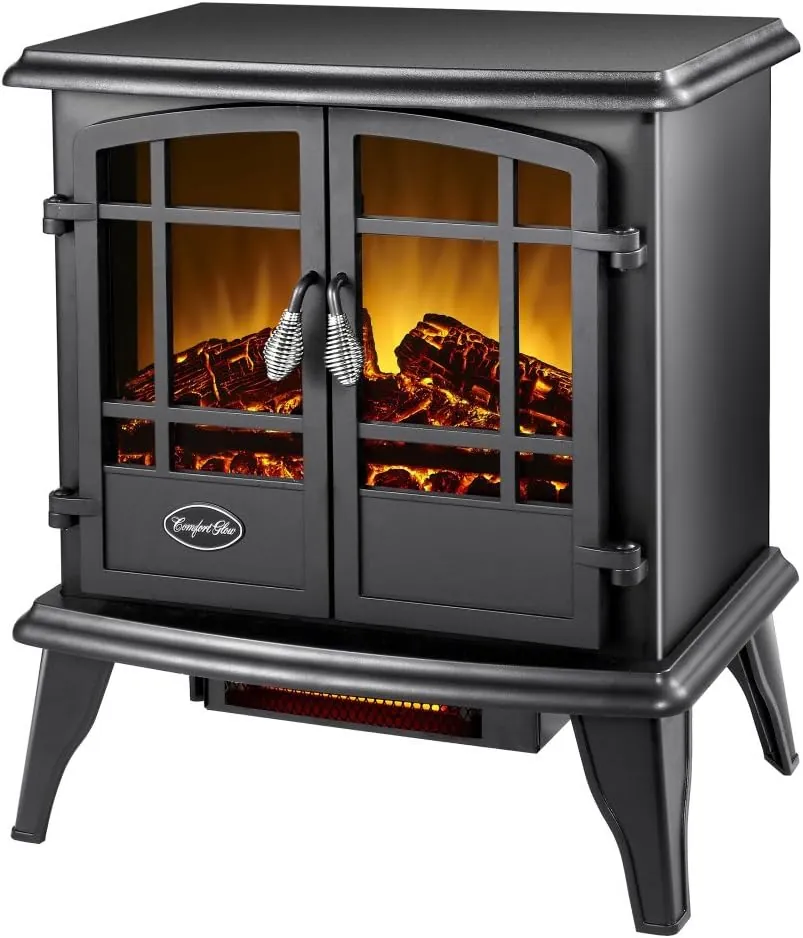
Comfort Glow EQS130 Electric Stove Heater
1,500 W
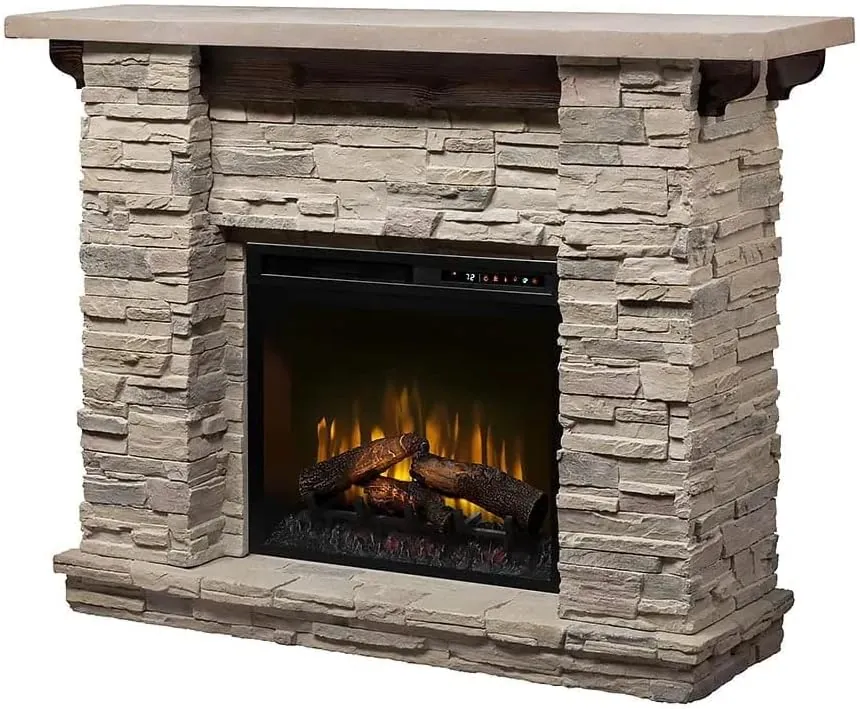
Dimplex GDS28L8-1152LR Electric Fireplace Mantel
1,500 W
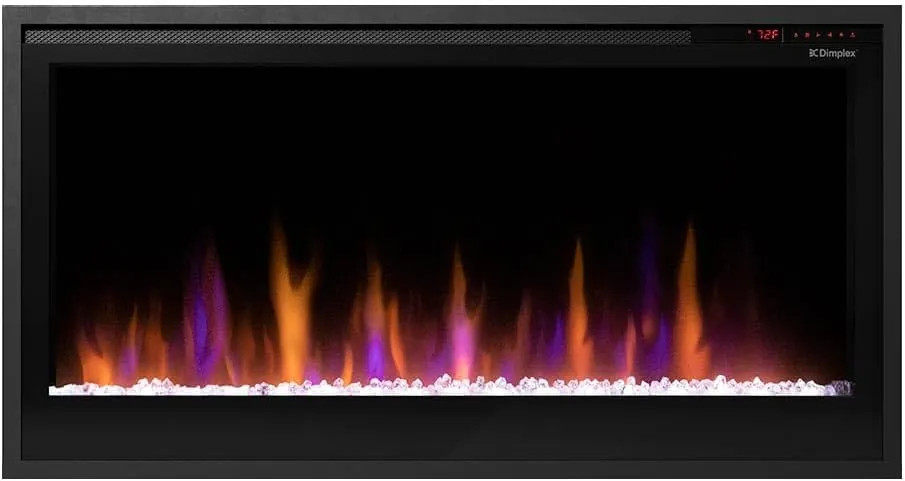
Dimplex PLF3614-XS Wall Electric Fireplace
1,500 W
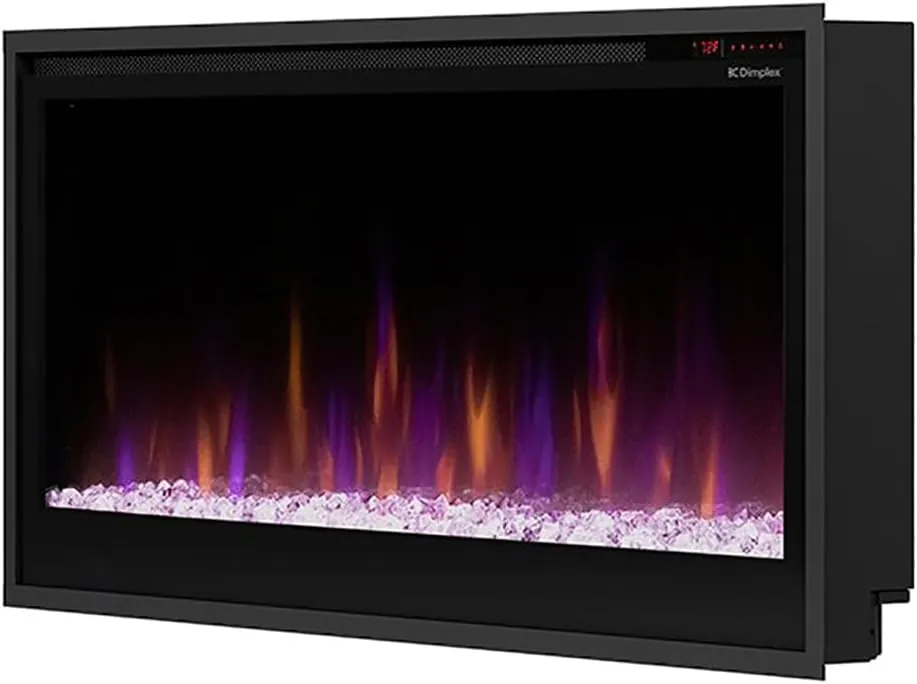
Dimplex PLF4214-XS Wall Electric Fireplace
1,500 W