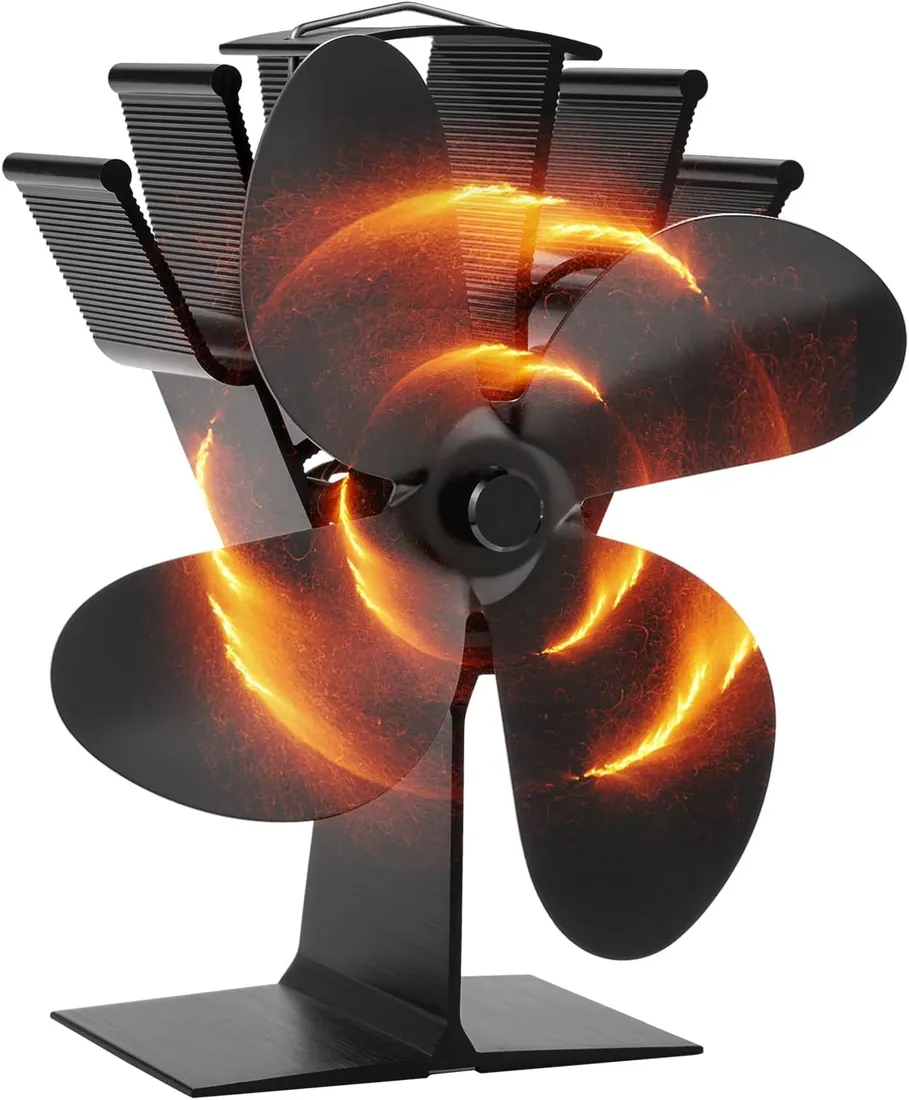
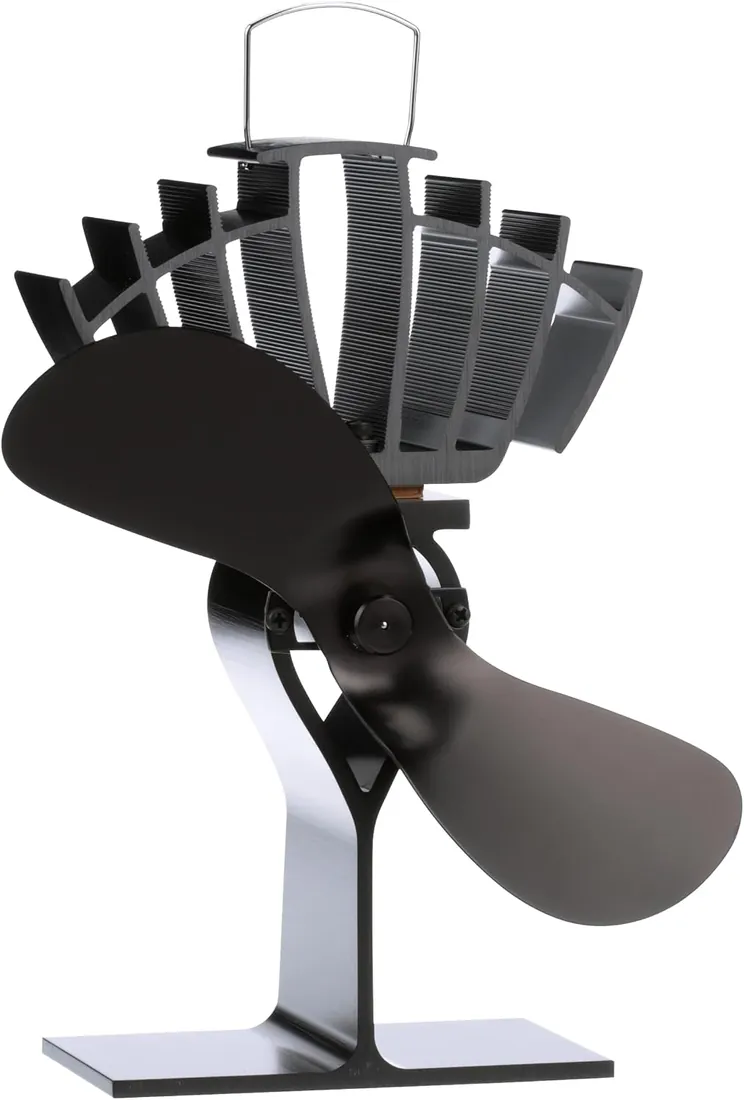
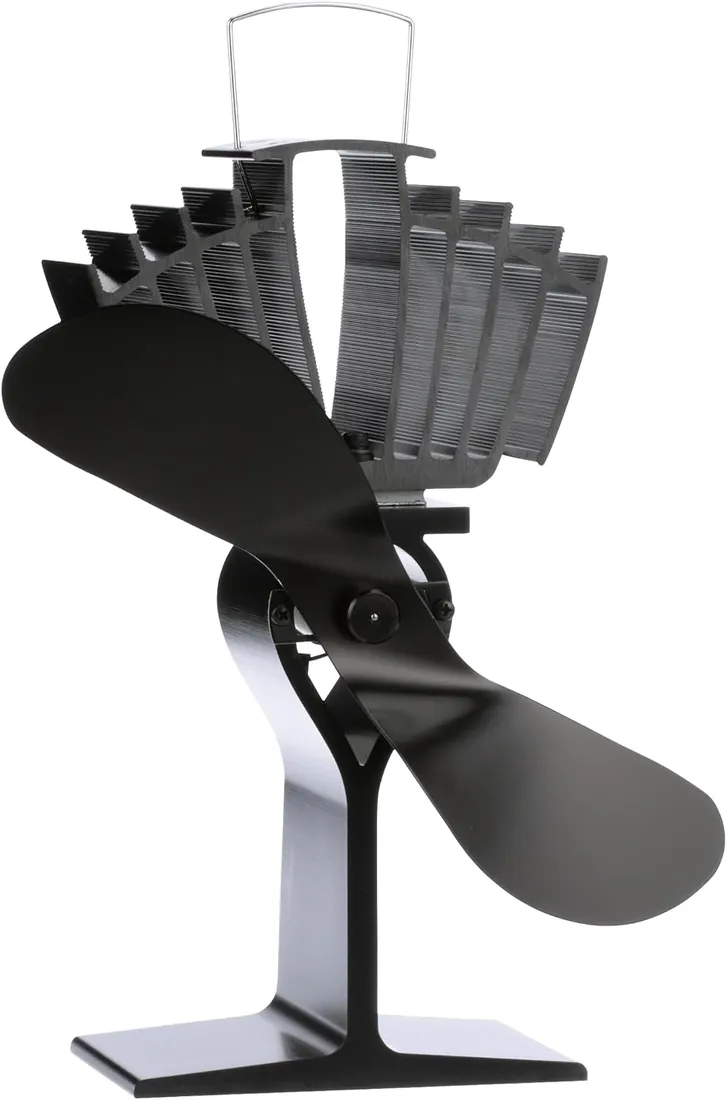
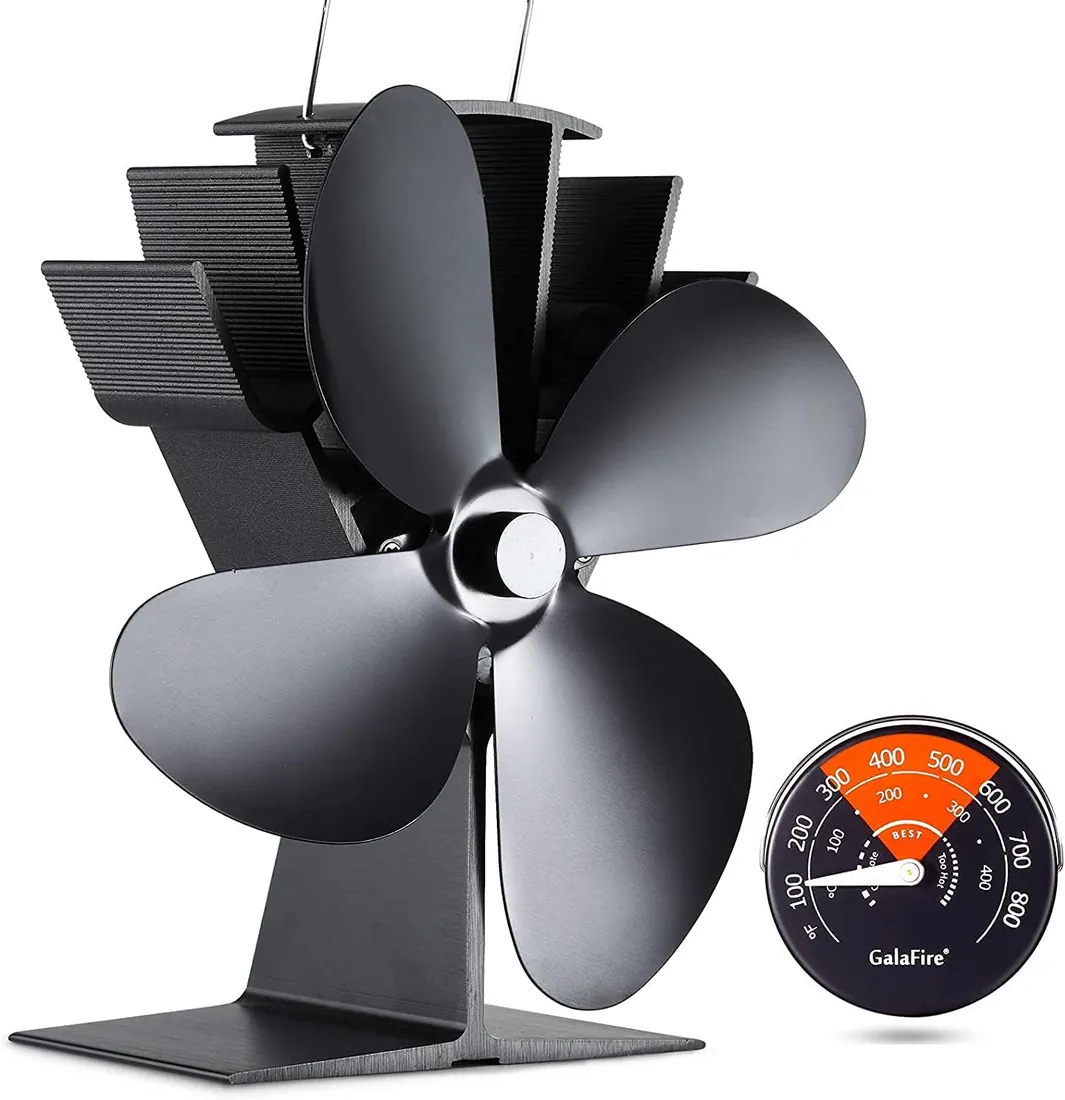
A heat-powered stove fan works by thermoelectric generation: its base sits on the hot stove, its fins stay cooler, and the temperature difference powers a small motor. It moves warm air from the stove top into the room, helping spread heat; it doesn't add heat. It needs a stove-top surface within the temperature range its maker states.
How it works
Inside the base of a stove fan is a thermoelectric module, a flat chip that produces a small current when one side is hotter than the other. The base sits on the stove top and gets hot; the aluminium fins above stay cooler because air moves over them. The temperature difference across the module drives the motor, so the hotter the stove top (up to the fan's limit), the faster it spins. No battery, cord or plug is involved.
What it does for a room
A wood stove sends heat up in a column of hot air above it, and that warm air tends to pool near the ceiling. A stove fan pushes a gentle stream of that warm air out across the room at seated height. It doesn't make the stove produce more heat; it spreads the heat the stove is already giving off, so the far side of the room warms sooner. Makers describe airflow and blade count but measure them under their own conditions.
| Fan | Blades | Operating range (maker) |
|---|---|---|
| COMBIUBIU SKUA90246 Stove Fan | 4 | Not stated |
| Ecofan 810CAXBX Stove Fan | Not stated | Not stated |
| Ecofan 812AMXBX Stove Fan | Not stated | Not stated |
| Galafire N429 Stove Fan | 4 | Not stated |
Placement
- Set it on the stove top toward the back, to one side of the flue pipe, so it draws cooler air from behind and blows warm air forward.
- Keep it off the flue pipe itself unless the maker allows pipe mounting.
- Don't place it where the stove top exceeds the maker's maximum temperature; overheating can damage the module.
- A magnetic stove-top thermometer helps you keep the surface in the right range.
Which stoves it suits
Stove fans suit freestanding wood stoves and many inserts with a flat top surface. They don't suit pellet stoves with built-in blowers or stoves whose top runs cooler than the fan's start temperature. Electric fireplaces don't produce the surface heat a thermoelectric fan needs. If the stove top runs very hot, choose a fan whose stated operating range reaches that high, or one with a built-in overheat protection the maker describes.
Buying checklist
- Operating temperature range the maker states.
- Blade count and size (more blades usually run quieter at the same speed).
- Base footprint that fits your stove top beside the flue.
- Overheat protection, if your stove runs hot.