Have the chimney inspected and cleaned each year before the heating season, as NFPA advises, and more often if you burn a lot or see buildup. Burning dry wood in hot fires slows creosote; a cap keeps rain, debris and animals out of the flue.
What creosote is
Wood smoke carries unburned gases and tar. When smoke cools as it rises through a chimney, some of it condenses on the flue walls as creosote: a black deposit that can be flaky, sticky or hard and glazed. Creosote is flammable, and a thick layer can ignite as a chimney fire. Smouldering fires and wet wood make far more of it, which is why EPA's advice to burn dry wood in hot fires is also chimney advice.
How big the risk is
NFPA estimates fire departments responded to an average of 37,365 home fires involving heating equipment each year from 2020 to 2024, 11% of reported home fires, with an estimated 417 civilian deaths, 1,260 injuries and $1.2 billion in property damage a year. Larger fires involving fireplaces or chimneys were fewer than one in ten heating-equipment fires (6%) but caused nearly one-fifth (19%) of the direct property damage.
The US Fire Administration's heating fire safety guidance and NFPA's both put the same habit first: get the chimney and heating system inspected and cleaned every year before the season.
How often to clean
| Situation | What to do |
|---|---|
| Every heating season | Inspection and cleaning before first use (NFPA) |
| Heavy use, wet wood or slow fires | Check the flue mid-season; clean when deposits build |
| Gas appliances and vented gas logs | Inspect yearly too; vents and chimneys can block or deteriorate |
| After a chimney fire | Stop using it until a professional inspects it |
| New stove, liner or change of fuel | Have the installation inspected |
A professional chimney sweep inspects the flue, liner, crown and cap, not just the soot; that inspection is the part a DIY brush can't replace.
DIY sweep kits
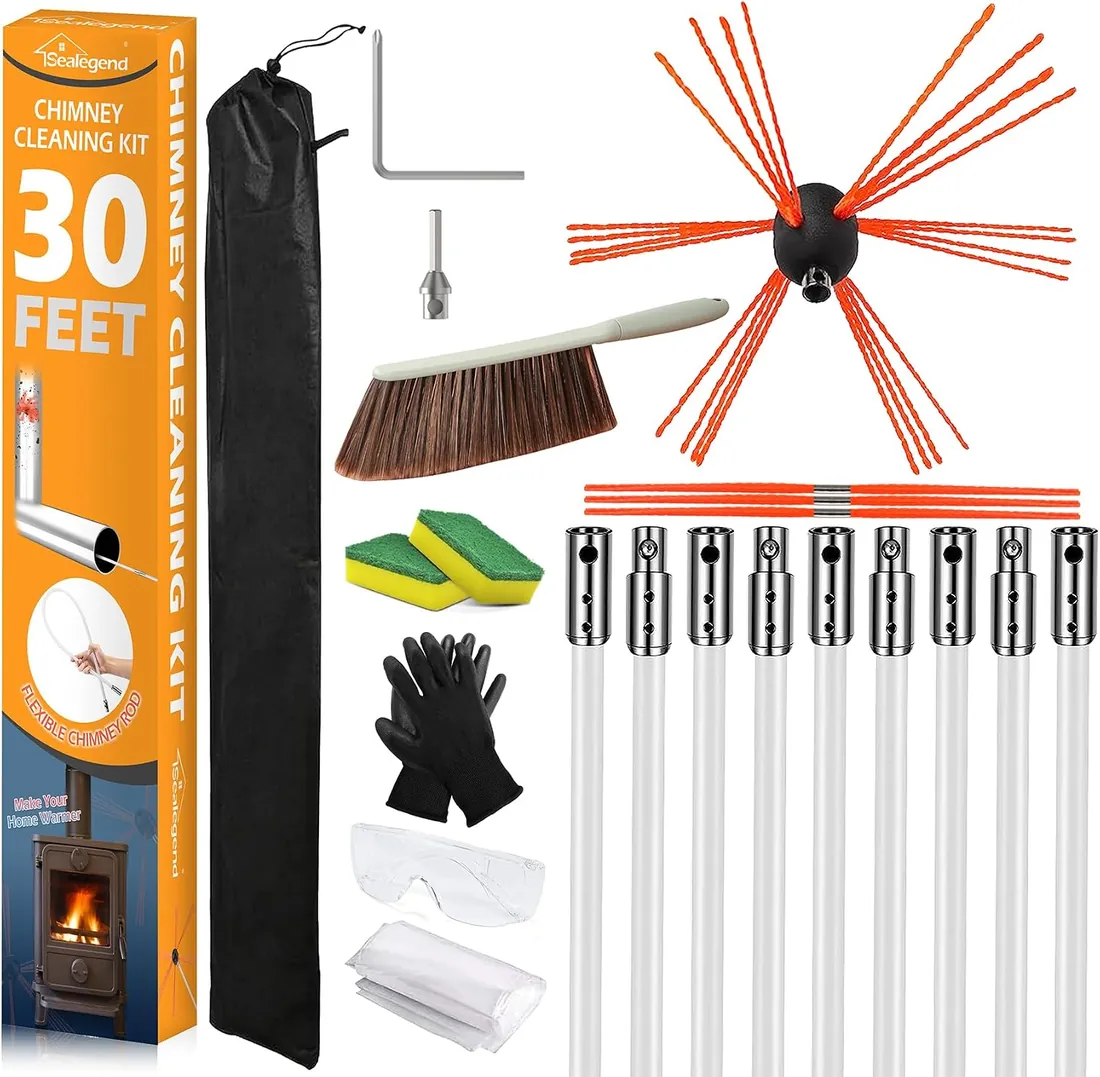
Rotary sweep kits use flexible rods and a brush head spun by a drill to scrub the flue from below; traditional brushes push and pull on stiff rods from the roof or the stove. They remove soot and loose creosote between professional cleanings. Match the brush size and shape to your flue (round or square, and its diameter), and use only the rod length your chimney needs.
Sweep kits in our catalog: Sealegend JT-YCS-30FT-9 Chimney Sweep Kit. Glazed, tar-like creosote doesn't brush off; that needs a professional.
Chimney caps
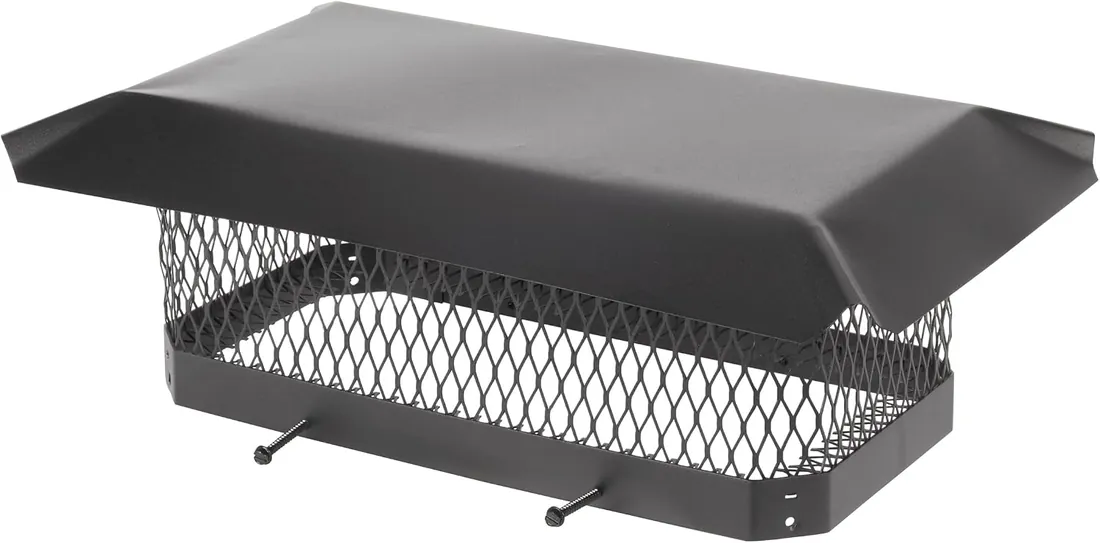
A chimney cap is a metal hood with mesh sides that sits on the top of the flue. It keeps rain off the liner and damper, stops leaves and nests from blocking the flue, and its mesh catches large embers. Caps are sized to the flue tile or pipe, so measure the outside of the flue before ordering. Caps we list: HY-C EVS918 Chimney Cap.